Filed under: Uncategorized — shibashake @ 3:37 am

Dog Obedience Training - Good and Bad

Dog Obedience Training - Good and Bad


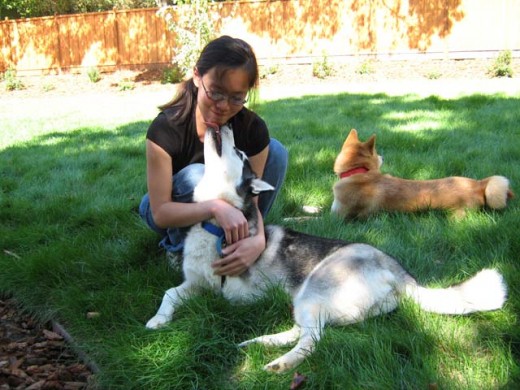
Reward dog training is very effective with Shiba Inu Sephy.

Reward dog training is very effective with Shiba Inu Sephy.

One of the most important decisions you will ever make for your dog is which obedience training method to use.

Your choice will affect the happiness and well-being of your dog, as well as shape your long-term relationship with your furry best friend.

Dog training is an area where emotions run hot, and you will hear many strong opinions or judgments from just about anyone and everyone.

The key to dog obedience training is not to be overly influenced by any one source. Gather information on a variety of obedience training methods, from a variety of sources, then judge which is the best one for you and your dog.

Some people may tell you that, “Obedience method X will never work for your dog, because he is too dominant, stubborn, fearful, or aggressive“.

Simplistic statements like these are never true. Research the training method and form your own opinion.

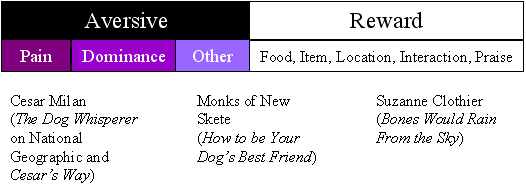
There are two classes of dog obedience training:

  1. Reward obedience training (give/remove something that your dog likes), and
  2. Aversive obedience training (give/remove something that your dog dislikes).

Dog Obedience Training - Reward and Aversive.

Dog Obedience Training - Reward and Aversive.

Reward Obedience Training

Reward Obedience Training

With reward obedience training, you first identify what your dog likes. Then, you encourage or discourage various behaviors by granting (positive reinforcement) or taking away (negative punishment) access to these rewards.

For example when your dog sits, he gets a dog treat. If your dog is calm, he gets to interact with other dogs. You stop your dog from chewing on shoes by redirecting him onto a Kong toy. Which rewards work best, depends on your dog’s personality and on his breed.

My Shiba Inu, for example, is a hunting breed and he is very motivated by chasing games. He is also very motivated by interaction with new environments and other dogs. I will often use these as rewards while training my Shiba Inu.

One common misconception is that you will not be an effective leader of the pack if you only use reward obedience training.

This is NOT true.

Pack leadership is most effectively achieved through the control of resources, such as food, toys, access to locations, and access to pack members. This can be done through the Nothing in Life is Free (NILIF) program and reward obedience training.

Suzanne Clothier writes a beautiful book, Bones Would Rain From the Sky, on why you want to cultivate a reward based relationship with your dog. Don’t Shoot the Dog by Karen Pryor and The Other End of the Leash by Patricia McConnell are good reward obedience training books.

Ian Dunbar is also very well known for his work in this area. Victoria Stillwell who hosts the show Its Me or the Dog on Animal Planet, also uses reward obedience training.


Reward Dog Obedience Training.

Reward Dog Obedience Training.

Reward Obedience Training – The Good


Reward Dog Obedience Training - The Good.

1. Reward obedience training helps to build a strong relationship based on trust.

Reward obedience training operates by controlling your dog’s resources. This teaches your dog that all good things come from you and if he wants what you have, he must first do what you want. Since you are viewed as a source of good things, your dog will naturally gravitate towards you.


Reward obedience training helps to build a relationship based on trust.

Reward obedience training helps to build a relationship based on trust.

2. Reward obedience training will not damage your dog either physically or mentally.

With reward obedience training, the worst that happens to your dog is the removal of a reward. In contrast, physical based aversive training can cause damage to your dog especially when not implemented properly. Long term use of choke collars may cause harm to your dog even when fitted properly.

3. Reward obedience training helps to create a dog that is happy and eager to work.

When you only use reward obedience training, your dog will be eager to work because work time means reward time.


Reward obedience training helps to create a dog that is happy and eager to work.

Reward obedience training helps to create a dog that is happy and eager to work.

Reward Obedience Training – The Bad


Reward Dog Obedience Training - The Bad.

Reward Dog Obedience Training - The Bad.

1. Reward obedience training may not always solicit a prompt response to your commands.

For most dogs, a reward may not be as strong a motivator as an aversive stimulus, such as pain and fear.


Reward obedience training may not always solicit a prompt response to your commands.

Reward obedience training may not always solicit a prompt response to your commands.

2. . Reward obedience training may sometimes require creativity to out-think your dog.

With reward obedience training, you may need to get creative and come up with your own strategies for motivating your dog. This is especially true when you are trying to stop bad behaviors because your dog may derive more enjoyment from the bad act.
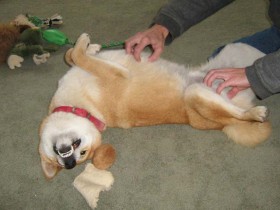

Reward obedience training may sometimes require creativity to out-think your dog.

Reward obedience training may sometimes require creativity to out-think your dog.

3. Reward obedience training may require that you bring along some treats or toys when on walks and outings.

This can be an inconvenience. However, you can also use the environment and objects around you to motivate your dog. It just takes a bit more creativity and a bit more understanding of your dog.

4. Reward obedience training may cause your dog to gain weight.

Obesity can sometimes become a problem if you give your dog too many dog treats.


Reward obedience training may cause your dog to gain weight.

Reward obedience training may cause your dog to gain weight.

Aversive Obedience Training

I divide aversive obedience training into three classes:

  1. Pain based (e.g. leash correction, muzzle slaps, ear pinchshock collar);
  2. Dominance based (e.g. alpha rolls); and
  3. Other – which includes making loud noises (e.g. shaking or dropping a can of pennies, loud horn, clashing pots), using unpleasant smells (e.g. spraying bitter apple on furniture, spraying diluted vinegar or citronella on muzzle), using unpleasant sensations (spraying water on muzzle, dumping water on body) or anything else that your dog dislikes.

Different aversive methods may place more or less stress on your dog. In general the pain and dominance based methods are the most stressful.

With aversive obedience training, you encourage or discourage behaviors by applying (positive punishment) or stopping (negative reinforcement) an unpleasant stimulus.

For example, if your dog breaks from his stay before you release him, you give him a leash jerk. If your dog starts biting on the leash, you give him a leash jerk or spray water on his muzzle until he stops. If he jumps, you give him a leash jerk or knee him.

Cesar Millan, one of the most popular and well known dog experts, uses mostly aversive obedience training. He has a popular TV series called The Dog Whisperer on the National Geographic Channel. His book, Cesar’s Way, has a very engaging writing style and Cesar has a fascinating story to tell.

One of the things you notice first about Cesar Millan is his great confidence and natural talent for reading dogs. This is very important when applying aversive obedience training methods. If these methods are not implemented properly, they may cause physical and mental harm.

There are a variety of other trainers that use a combination of both reward and aversive methods such as The Monks of New Skete.


If aversive training methods are not implemented properly, they may cause physical and mental harm.

If aversive training methods are not implemented properly, they may cause physical and mental harm.

Aversive Obedience Training – The Good


Aversive Obedience Training - The Good.

Aversive Obedience Training - The Good.

1. Aversive obedience training may get more consistent and prompt responses to commands.

Many dogs will perform a Sit, Down, or Stay, consistently and quickly because they do not wish to face the stress of an aversive stimulus. Once you get consistent and prompt responses from your dog, you can give him more freedom and let him participate in a wider range of activities.

2. Aversive obedience training may show results in a shorter time-span.

As described above, dogs can be very motivated to avoid an aversive stimulus. You will probably start to see results to simple commands in a shorter period of time compared to reward obedience training.

3. Do not need to carry around rewards such as treats or toys.

You always have what you need with you.


A leash and a secure backyard are probably more effective than aversive obedience training for keeping a dog from running into traffic.

A leash and a secure backyard are probably more effective than aversive obedience training for keeping a dog from running into traffic.

Aversive Obedience Training – The Bad


Aversive Obedience Training - The Bad.

Aversive Obedience Training - The Bad.

1. Aversive obedience training may cause loss of trust.

One of the most dangerous aspects of aversive obedience training is losing your dog’s trust. If you over-correct your dog, he may start to associate you with the painful aversive stimulus and lose trust in you.


Shiba Inu Sephy was a lot less trusting when we applied aversive obedience training.

Shiba Inu Sephy was a lot less trusting when we applied aversive obedience training.

2. Aversive obedience training may encourage aggression and other unwanted side effects.

If you do not implement an aversive method with the proper timing, force, and redirection, your dog may develop aggression towards humans. A recent University of Pennsylvania study shows that 1 in 4 dogs exhibits aggression during aversive obedience training.


Follow up an aversive correction with praise and rewards.

Follow up an aversive correction with praise and rewards.

3. Aversive obedience training may injure your dog if not implemented correctly.

Incorrect implementation of some of these techniques may cause physical harm to your dog, as well as physical harm to you and others if your dog becomes aggressive.

4. Aversive obedience training may become ineffective once your dog gets habituated to the aversive stimulus.

If you overuse an aversive method, it is very probable that your dog will become habituated to it. Once this occurs, your dog will be less motivated to respond to your commands because the pain or aversive stimulus is no longer unpleasant.


Aversive obedience training may encourage aggression and other unwanted side effects.

Aversive obedience training may encourage aggression and other unwanted side effects.

Dog Obedience Training

Hopefully this gives you a quick overview of the different dog obedience training methods. Carefully consider which is best for you and your dog. Be flexible and change your approach if the aversive methods start to cause dog aggression.

There are four dog obedience training choices:

  1. Mostly aversive obedience training with little praise and few treats (Cesar Millan).
  2. Only reward obedience training (Suzanne Clothier, Patricia McConnell, Ian Dunbar, Victoria Stillwell).
  3. Mixture of aversive and reward obedience training (Monks of New Skete);
  4. Only no-pain and no-dominance aversive methods, combined with reward obedience training.

I use reward obedience training with my dogs and it works out great.

I use reward obedience training with my dogs and it works out great.

Related Articles

<< Previous Next >>

<a href="http://www.shibashake.com/dog/operant-conditioning-and-dog-training" target="_top">Operant Conditioning and Dog Training</a>

Operant Conditioning and Dog Training

Operant conditioning does not mean reward training. Operant conditioning actually encapsulates both reward and aversive training. In its simplest form, operant conditioning says that to shape a dogs behavior, we can either add or take away a reward stimulus (positive reinforcement, negative punishment); or we can add or take away an aversive stimulus...

<< Previous Next >>

<a href="http://www.shibashake.com/dog/using-food-in-dog-training-bribery-or-reward" target="_top">Using Food in Dog Training - Bribery or Reward?</a>

Using Food in Dog Training - Bribery or Reward?

Many people view the use of food during dog training as doggy bribery Is this true? To find the answer to this question, we must examine dog training in greater detail. Dog training can be divided into - Aversive based dog training (traditional methods) and Reward based dog training (positive reinforcement methods). Reward based dog training controls...

<< Previous Next >>

<a href="http://www.shibashake.com/dog/food-training-good-bad-bribery" target="_top">Food Training - Good, Bad, or Bribery?</a>

Food Training - Good, Bad, or Bribery?

There are, in essence, two schools of dog obedience training. Aversive dog training (traditional methods) and reward dog training. In reward dog training, food is sometimes used as a motivator for work and success. This is not unlike the wage bonuses we receive for a job well done. However, some people view the use of food rewards as dog bribery....

<Playback Stop Play >

22 Comments

  1. Hello Tsuki,
    Everybody makes mistakes. I made the same mistakes when I started out with Sephy. I actually did a whole training program with a traditional trainer who did leash corrections. I also did alpha rolls on Sephy at the recommendation of my breeder and vet tech.

    I think you are already way ahead of me because you stopped after one class with Kameron. It is also great that you are doing so much research. Haruki is a lucky Shiba to have an owner who cares so much. Making mistakes is natural, I think. What is important is realizing our mistakes and taking steps to fix them :)

    Based on my experiences with Sephy, he really did not respond well to any physical techniques and became more aggressive. Alpha rolls especially, made him very sensitive to handling. After I switched to purely reward based training, his behavior improved significantly – not overnight – but over time.

    If you are interested here is an article I wrote about dog psychology and dog behavior modification –
    http://www.shibashake.com/cesar-millan/dog-psychology-cesar-millan-how-dogs-think-and-learn.html

    Are you starting a training program with this new trainer? Let me know more when you get the chance.

    6:27 pm on August 13th, 2009
  2. Tsuki

    I know Haruki’s aggression is not a thing that happened over night, out of no where, and out of a sudden.

    I feel like crap.

    I tried my best in providing a loving home, quality food and quality time. I never raised a hand on him. I always thought that he was just tough and stubborn.

    After consulting a very reliable trainer about aggressions and behaviours, I realize that I had been practicing some methods taught to me by that trainer can promote aggression.

    What I can say is that… I was glad that I stopped with Kameron after one class and it was out of the worst luck that I even started with Kameron.

    I have a lot of work with Haruki now and it breaks my heart to know that I had practiced bad training methods that had hurt Haruki.

    2:56 am on August 12th, 2009
  3. Tsuki

    ^_^

    Yeah, I ended the class. The street safety method didn’t bother me, I think some of their practice works nicely. Haruki followed me closely when he was on leash. It was just like when Brad Pattison had showed on TV. Yeah, treats are not allowed, since it was explained as a method similar to bribery.

    But it was just that one particular method which bothered me. Um, I’m not sure if it is CET or just the trainer that uses this method where they would pat the face of a dog with both hands until it doesn’t jump on you anymore. I rather not practice it, to me that action is just the same as slapping or hitting the dog in the face even if it’s gentle pats. Haruki’s eyes squinted when that action was applied. I can’t afford to bring aggressions out of Haruki, especially not flight or handler. But over all, I think the martingale that they uses works the same as a choke chain but just looks gentler to the human eye.

    Haruki is tough and falls into a lot of the aggression issues that I was researching about. As much as I like to enforce lots of positive and more gentle training, I sometime need to enforce some aversive methods. I know it does not look to sound nice, but I strongly believe that I must commit to some methods in order for Haruki to understand growling – teeth showing and actual disagreeing bites are not allowed. Currently, I only know of one way to correct Haruki when that happens, it is to pin him on his sides… until he calms.

    For Haruki, it’s not the sit, hand, stay and come that I worry about. I guess it’s called Behaviour Modification that he needs? I have been reading into a lot of books to understand about dog aggressions and see what I can do….

    5:04 am on August 10th, 2009
  4. Hello Tsuki,
    Good to see you again!

    I am very glad to hear that you decided to stop with the CET class. After watching some episodes with Brad Pattison, his methods seem like extreme traditional training which tends to not work well with Shibas. What was the questionable method btw.? I always like to keep up with everything that is out there :)

    “I finally realize that it is me who is having problems.”
    Yeah – after I realized this with Sephy things improved dramatically. Most of my problems came from >me< not having the right energy. After that improved, things really took a very positive turn :)

    “I guess owning a dog is like a parent, you get judged a lot. … If I go positive, I’m too soft and weak. If I go aversive, I’m too tough and abusing. Sigh.”
    lol – I so agree with this. I had a hard time with that too. My old neighbors always looked at us cross-eyed. Nowadays I just try to do what I think is best for Sephy and Shania, and the other people can judge whatever they want because Sephy and Shania matter a lot more to me :)

    “I’m still learning and lets hope I am going towards the right track.”
    You are definitely on the right track. Learning, keeping an open mind, and putting Haruki’s welfare first sounds like a really good track to me!

    Would like to hear more about the CET class when you have the time. Is it mostly collar corrections? Or were there other things? Are they very much against the use of food?

    Thanks!

    8:10 pm on August 9th, 2009
  5. Tsuki & Haruki

    Hi!!!!
    It’s been a while since my last post.
    Sorry, I’m posting all over the place!….Heh ^_^

    Well Haruki and I had started training with the CET trainer.
    It worked okay for the first class, we practice some of the methods, mostly street safety issues. There were one questionable method that I hold off on. Than I decided not to practice on the method mentioned by the trainer.. because no matter how you think about it, the method just doesn’t bode well. But I stopped furthering with the training with the trainer. I just wanted to see what else is there. It’s tough, I finally realize that it is me who is having problems. It’s me all along and I know it’s not easy being a tough person and having the right kind of common sense as to what to do if Haruki does this or that. I guess, it’s all about understanding your dog. I’m starting to read into a lot of books, to see if I can pick up some training methods that works well with me and Haruki.

    I guess owning a dog is like a parent, you get judged a lot.
    I didn’t realize that until I got my pup. I think the toughest part is this than the actual training. There’s always someone who has their own opinion on how a person should train their dog. If I go positive, I’m too soft and weak. If I go aversive, I’m too tough and abusing. Sigh.

    But like you said, we know our dogs best and we know what works and what doesn’t. Aversive or positive, I guess we all aim for a dog that is has a happy life and a life happy to have with a dog.

    I’m still learning and lets hope I am going towards the right track.

    Thanks! Feel free to visit more of Haruki images on FLKR. He looks much bigger now!

    Thanks!

    Tsuki & Haruki

    6:40 am on August 8th, 2009
  6. Thanks for dropping by ShepXgang.

    “I wouldn’t recommend “pain aversion” for someone who doesn’t know what they’re doing. I’ve been training dogs for over 30 years now…”

    That is very well said. Unfortunately, I think that is still the dominant method of dog training for most people – even new dog owners.

    I also agree that the electronic collar can be useful in limited circumstances. As you say they are only appropriate for very intermittent short-term use, and only by someone who really knows what they are doing wrt. timing, force, and redirection.

    Distance work and using them for rattlesnake aversion are the two circumstances that I can see them being of use. I am actually thinking of writing an article about electronic collars since they seem to be somewhat popular – which is unfortunate.

    9:52 pm on June 25th, 2009
  7. ShepXgang

    “Reward” training for me with my dogs has never been with food, but always about praise and affection (calm praise with particularly high energy dogs so they don’t take it as an “okay” release but continue to heel, etc.). Likewise, voice disapproval is much more effective than a leash jerk or some such. Of course, it seems I have been blessed with dogs who actually CARE whether I approve or disapprove of what they do and wish to please me.

    I did have one particularly independent “student” this did not work with so well initially–a JRT/Aussie mix–and I realized that he needed more of a reason to care about what I thought (it also took him several months before he came to feel that I and my other shepX were his pack to stick around with). Trying reward treats when you’re trying to enforce recall or a “50 yard radius” range around me while hiking together in the woods is pointless, and he’s the one who needs to pay attention to where I am and stay within the “zone.” I admit I resorted to an electronic collar. He learned the meaning of “too far” (the first warning, 2nd was a tone from the collar, only then came a short zap) and he learned to orient to where I was. He probably wore the collar a total of two dozen times, got zapped (on the lowest setting) maybe 5 or 6 times, and hasn’t needed the collar since. Oh, his hearing also improved dramatically! “Too far” now has him wait up for us to catch up. And as coming back toward me was always greeted with high praise, he also learned joyful recall as a by-product. He is smart enough to know that he’s not wearing the shock collar anymore, too, it just helped him change his thinking about being with the pack.

    I wouldn’t recommend “pain aversion” for someone who doesn’t know what they’re doing. I’ve been training dogs for over 30 years now…

    9:51 pm on June 25th, 2009
  8. Hi kblover,

    “Nice to know I was on the right track with the multiple rewards :) still learning this world of dog training”

    Yeah – save the best reward for recalls, and only use it during recalls and nowhere else. If you have that, then the world is your oyster :)

    “If a tired dog is a good dog, a hungry Wally = an eager student!”

    lol – I can just see Wally now, sitting in a perfect begging position, with his tongue hanging out, and looking just so :) Gotta love them dogs!

    9:50 pm on May 30th, 2009
  9. Nice to know I was on the right track with the multiple rewards :) still learning this world of dog training.

    I’m thankful Wally’s so food oriented. It’s hard enough keeping a step ahead of him sometimes and trying to make sure he’s making the right connections – last thing I need to do is try to come up with too many other rewards :)

    If a tired dog is a good dog, a hungry Wally = an eager student!

    9:49 pm on May 30th, 2009
  10. Hi kblover, I definitely agree with you. I am not a big fan of using physical corrections either. I started out with physical corrections, and it just made my dog more aggressive. My dog also started to lose trust in me. Now I only do reward obedience training.

    You are also definitely right on with the different levels of reward. With some dogs though, it can be difficult to find a high priority enough reward to get them to comply. This is especially true for dogs that are not as food focused.

    My Shiba is like that. So I just get more creative with him, and use things like cats, other dogs, balls he finds in the street :) as his high priority rewards. It actually works out much better than physical corrections.

    9:48 pm on May 30th, 2009
  11. I use a mixture of reward and no-reward training (Mix of reward and no-pain aversive poll option). I believe it lets me say both “yes” (reward) and “no” (no-reward) to the dog. I don’t like aversives that are directly physical and intimidating, especially with Wally – he’s already soft and very sensitive.

    I think reward training can get around the “lagged response” if two rewards are used. The “fast response” reward is something really high value (favorite treat, piece of meat, etc) while a “plain” reward for a compliance but slower than you’d like?

    9:47 pm on May 30th, 2009
  12. Thanks Tom – You put a BIG smile on my face on this beautiful Sunday morning :D

    9:46 pm on May 30th, 2009
  13. Shibashake, I love the way you put a hub together. Such great information.

    9:45 pm on May 30th, 2009
  14. frogdropping – Is that why you got Kevin? ;)

    rchicaferro – lol! I don’t know about that. It would depend on the newspaper. Surely it would be ok if it were the NYTimes! ;)

    9:44 pm on May 30th, 2009
  15. rchicaferro

    AND, reward training is more FUN then aversive training!

    This helps me understand why I jump up and down when someone offers me a piece of pizza! Much more fun then getting hit on the nose with a rolled up newspaper!

    9:43 pm on May 30th, 2009
  16. Shiba – the idiot was was called Amber. Completely braindead :) No joke!

    9:42 pm on May 30th, 2009
  17. My favorite green friend! It is so good to see you.

    Thanks for sharing your story. I had a GSD when I was growing up. Really love that dog, but I could not take care of him the way I wanted to – being just a silly little kid, and a female one at that! :)

    I have been toying with the idea of getting another dog, but I am not sure I want to upset the doggy boat at the moment. Plus, I would then have no time for HubPages which would be a damn shame!

    Would love to hear more about your dogs – you should write a hub about it! :)

    9:41 pm on May 30th, 2009
  18. Shiba – hey :) I don’t have a pooch but have had them in the past. One was beyond redemtion – a first class idiot she was – but my shepherd was sublime. Trainable, noble, loyal. Everything you could want in a dog and more. Still brings a tear to my eyes when I look at pictures of him, 10 years after he died.

    He was a rescue – malnourished, maltreated, almost a year old and the vet advised I had him euthanised. I chose not to. It was extremely tough to bring around but he was worth the effort.

    I used many different methods. Advice, books, common sense all came into my attempts to retrain him. I had a wonderful time with him and he was a wonderful pet :)

    9:40 pm on May 30th, 2009
  19. Thanks all for dropping by.

    Yes that is indeed my little Cujo. He hasn’t been very Cujo-ish lately though :) How is your little Cujo? Do you have a picture of him up yet?

    9:39 pm on May 30th, 2009
  20. Is that Cujo Inu, standing stiff on all fours? Looks cool! :)

    9:38 pm on May 30th, 2009
  21. Very well researched and written. Thanks.

    9:37 pm on May 30th, 2009
  22. Very good points. I had not thought of some of those. Thank you.

    9:36 pm on May 30th, 2009

RSS feed for comments on this post. TrackBack URL

Leave a Reply

Copyright © 2009 - All Rights Reserved. Powered by WordPress & Theme Shiba by ShibaShake. Privacy Policy
search button search button
rss